Hampden United Methodist Church
April 21, 2024 homily on Psalm 23 and John 10:7-11 by Pastor Galen
In Psalm 23 we read the words, “The Lord is my shepherd” (Psalm 23:1a), and in John 10, Jesus said, “I am the good shepherd” (John 10:11a).
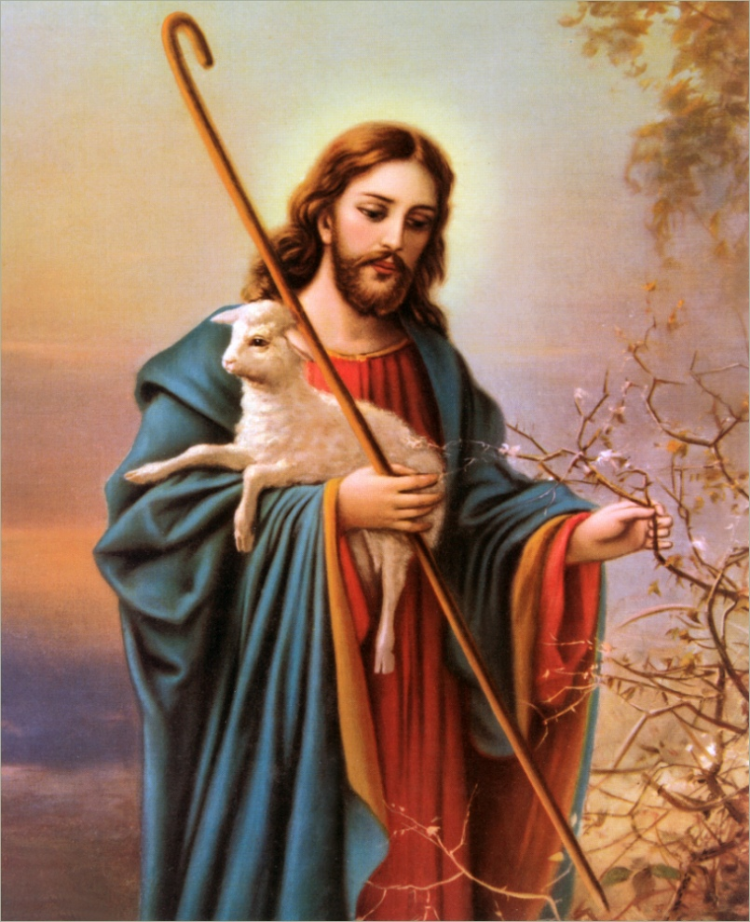
When we imagine Jesus as the Good Shepherd, many of us imagine a shepherd with long wavy hair, holding an adorable little lamb. The sheep is immaculately groomed, without a spot or a blemish, and so is the shepherd. Every hair of his long wavy hair is in place, and his clothes are wrinkle-free. If there’s scenery in the background, there are gently rolling hills, and the grass looks so soft it might as well be carpet.
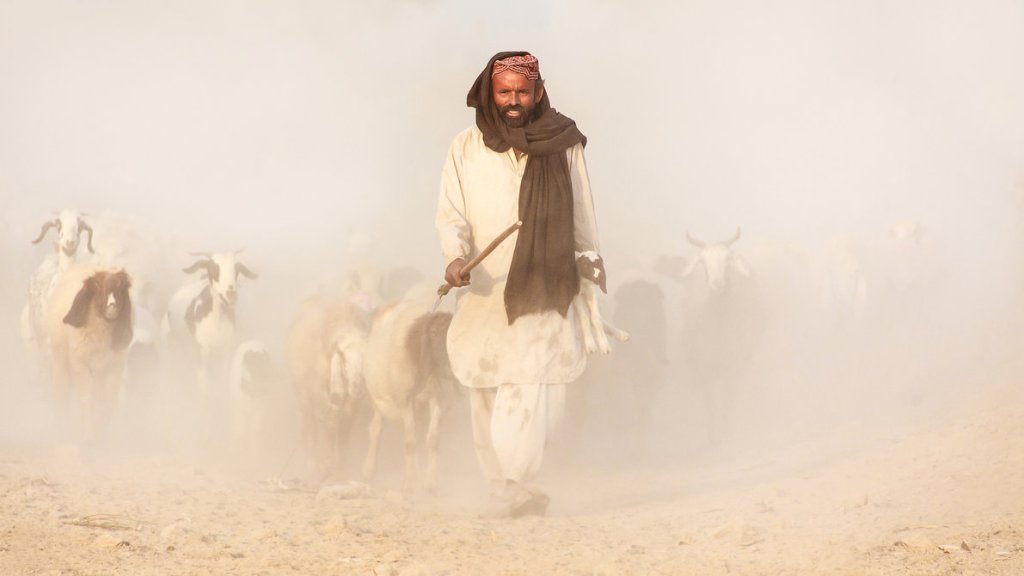
But the reality is that sheep herding in Bible times was a dirty, smelly job. Shepherds were out in the fields with their sheep for hours (and many times, days) on end, and so they wouldn’t have always had the opportunity to take showers or baths. Sometimes they had to lead their sheep long distances, across hills and valleys, to find suitable pasture for the sheep to graze, or to find suitable water for the sheep to drink (since sheep like water that is completely still). They would have had to cross rocky terrain, and navigate through fields with thorns and thistles. No doubt scrapes and bumps and bruises were a natural occurrence on the job.
To top it off, wild animals would occasionally try to attack the sheep. Shepherds had to always be on their guard. They had to be tough and always ready to defend their sheep from any such predator.
The Gate for the Sheep
In John 10, Jesus refers to himself as the “gate for the sheep” (John 10:7), and says, “I am the good shepherd. The good shepherd lays down his life for the sheep” (John 10:11). This may seem like an odd statement to make. After all, how can a shepherd be a gate? To understand this, we have to understand that in Bible times, sheep were often kept in sheepfolds that did not have a gate across the entrance.

If you go someplace like England today, you will still see stone sheepfolds like these scattered around the hillsides.
Shepherds would lead their sheep to find green pastures where they could graze during the daytime. At night they would call their sheep to come into the fold, and then the shepherd would physically lay across the entrance to make sure that no sheep escaped, and that no wild animals or thieves got in to steal the sheep.
In this way the shepherd became the door, or the gate for the sheep fold, literally laying down his or her life to protect the sheep. And this is a symbol of what Jesus did for us when Jesus willingly laid down his life for us, giving his life for us on the cross to set us free from the power of sin and death. Of course, Jesus did not stay in the grave. As we celebrate during this season of Easter, Jesus rose from the grave, defeating the power of sin and death, and he sent his Spirit to live inside of us, to empower us to live as faithful disciples of Jesus Christ. Even now he is looking out for us, watching over and protecting us.
Our Father in Heaven
When I think about the care and concern that shepherds had for their sheep—how they led their sheep to find green pastures and still water, how they were always on alert to protect them against any dangers that might come their way, I think about how this is reminiscent of the care and concern that parents have for their children. Part of the role of being a parent or caregiver is to nurture a child, to make sure they have the resources they need. Parenting and caregiving also involves protecting children from dangers and from harmful influences. And, it often involves making great sacrifices for our children.
It’s no wonder that in the Bible, in addition to the imagery of a Shepherd, God is often referred to as our Father, and both Jesus and God use motherly imagery to describe their care and concern for us as children of God. For example, Jesus said to the city of Jerusalem, “how often I have longed to gather your children together, as a hen gathers her chicks under her wings…” (Matthew 23:37; Luke 13:34), and God said in the book of Isaiah, “As a mother comforts her child, so will I [God] comfort you; and you will be comforted over Jerusalem” (Isa. 66:13).
Shepherding/Parenting those under our care
For those of us who are parents or caregivers, our role involves not just providing the physical resources that our children need, but it also involves nurturing our children in the faith.
When parents or sponsors bring their children to be baptized in the United Methodist Church, they are asked the questions that baptismal candidates who are old enough to answer for themselves are usually asked. Parents and sponsors are asked such questions as: “Do you renounce the spiritual forces of wickedness, reject the evil powers of this world, and repent of your sin?”and “Do you accept the freedom and power God gives you to resist evil, injustice, and oppression in whatever forms they present themselves?” And they are also asked, “Will you nurture these children in Christ’s holy church, that by your teaching and example they may be guided to accept God’s grace for themselves, to profess their faith openly, and to lead a Christian life?”
This last question is key, because baptism is not the “be-all and end-all.” Baptism is just the beginning of our journey of faith. “Baptism begins God’s work of saving us by cleansing us of sin and beginning the work of renewing us fully into the image of Christ. The key word here is beginning. Baptism starts the process. It does not complete it.”1

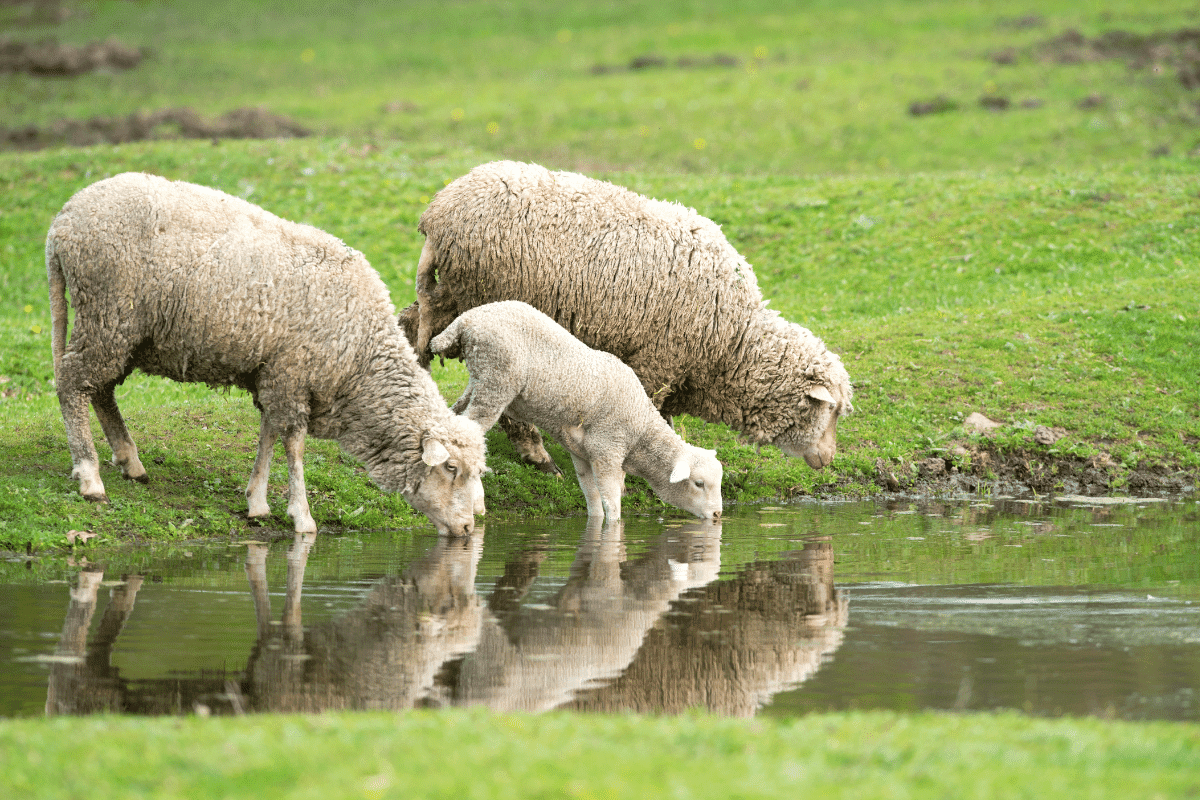
The way I think of it, it’s sort of like the saying, “You can lead a horse to water, but you can’t make him drink.” Or, to use the imagery of our Scripture reading from today, a shepherd can help their sheep to find still water, but they can’t make them drink. Similarly, parents and caregivers have the responsibility to nurture their children in the faith, to be good examples and teachers to them, but in the end, it’s up to each of us to accept God’s grace for ourselves.
As parents and caregivers, we all make mistakes, and we all mess up from time to time. We’re not always good parents. But even then, we can be good examples when we are willing to acknowledge our mistakes, and give and receive grace.
We do our part when we lead our children to the “water” where God begins a good work in them. We also have a responsibility to nurture them in the Church so that they can be guided to accept God’s grace for themselves. This is why Sunday School and Vacation Bible School are important. This is why it’s important to teach our children to pray, whether it be at mealtimes or before bed. It’s why it’s important that we teach children how to read the Bible, and instruct them in the stories of our faith. And it’s why it’s important that we nurture our own faith, so that we can better instruct others in the faith.
The good news is that parents and caregivers do not have to do this alone. We have a Good Shepherd, a Good Parent who is always looking out for us. This is also why we have the Church. And this is why, when a parent or sponsor brings a child to be baptized, the whole congregation reaffirms their commitment to Christ, and promises to “surround these persons with a community of love and forgiveness, that they may grow in their service to others.” The whole congregation commits to praying for them, “that they may be true disciples who walk in the way that leads to life” (UMH 40).
Conclusion
And so this morning, may we be encouraged to know that we are not alone. We have a Good Shepherd who cares for us, even as we seek to nurture those under our care. May we be reminded that Jesus is right here with us, looking out for us and our loved ones. May we each learn to drink deeply of the grace and forgiveness that is available to us. And may we encourage one another to listen to the voice of our Shepherd, who leads us to green pastures, and to still waters.
Amen!
Questions for Personal Reflection:
- Reflect on the symbolism of Jesus as both the shepherd and the gate for the sheep. How does this imagery deepen your understanding of his sacrifice and protection?
- Consider the responsibilities of parents and caregivers to nurture children in the faith. How do you approach this responsibility in your own life, whether as a parent or a mentor?
- Reflect on the significance of baptism as the beginning of a faith journey. How has your own baptism or the baptism of someone you know impacted their life or faith?
- Reflect on the importance of community in nurturing faith, as described in the sermon. How does your faith community support and encourage you in your own journey?
- Consider the concluding message of the sermon regarding the presence and care of Jesus in our lives. How can you actively seek to listen to the voice of the Shepherd in your daily life?
 Hampden United Methodist Church
You must be logged in to post a comment.