
March 9, 2025 homily on Deuteronomy 26:1-11 and Luke 4:1-13 by Pastor Galen for the 1st Sunday in Lent
“Jesus, full of the Holy Spirit, returned from the Jordan and was led by the Spirit in the wilderness, where for forty days he was tested by the devil.” — Luke 4:1-2a
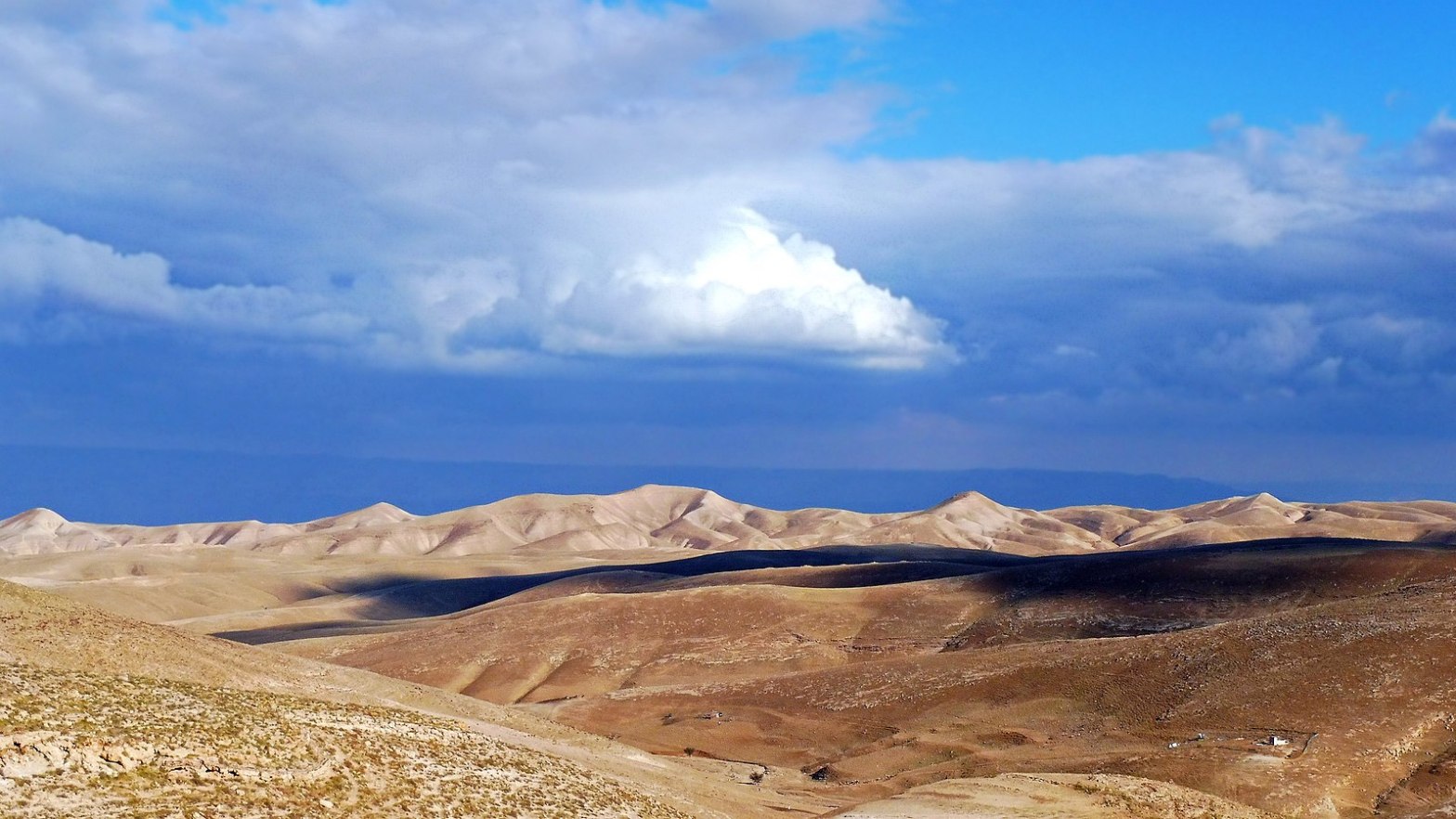
The Wilderness
What would you pack to take with you if you were going to spend forty days in a desert wilderness? If you’re like me, you’d want to bring plenty of food, some form of shelter, and something to help pass the time.
Who would you want to accompany you? Perhaps your parent, spouse, or best friend — someone who would look out for you, who had your best interests at heart.
But when Jesus was led into the wilderness for forty days and forty nights, he had none of these things. No food, he took no tent that we know of. And he had no traveling companion — other than the devil who tested him and who certainly did not have his best interests at heart. While Jesus was in the wilderness for those forty days, he had to look to God alone for his provision and protection, and this set a precedent for the rest of his life and ministry.
The Israelites also had a wilderness experience. In fact, they spent 40 years in the wilderness after God delivered them from slavery in Egypt. The Israelites were supposed to enter the Promised Land right away, after a relatively short journey through the wilderness, but because of their disobedience and lack of faith, they were forced to wander in the wilderness for 40 years. During those 40 years, they faced tremendous trials and temptations, and often they failed to trust God, but throughout those 40 years, they learned more and more to depend on the Lord, such that at the end of those 40 years they were ready to enter the land that God had promised their ancestors.
The book of Deuteronomy is essentially Moses’ final instructions to the people as they were preparing to enter the promised land. One of the things we see here is Moses’s concern that when the Israelites entered the Promised Land they might forget their need and dependence on the Lord. And so he initiated several practices to help them remember their need and dependence on the Lord, even when they experienced prosperity.
First Fruits and Tithe
One such practice was the Festival of First Fruits, described in Deuteronomy 26, where the people were to take the first portions of their harvest each year, bring them to the temple, and dedicate them to the Lord. Moses even gave them the words to say — a printed prayer to put in their worship bulletins, if you will — to help remind them that every blessing they had was from the Lord. He instructed them to say, “‘…A wandering Aramean was my ancestor; he went down into Egypt and lived there as an alien, few in number, and there he became a great nation, mighty and populous…” (Deuteronomy 26:5).
Then Moses instructed the people to recount the story of how they were enslaved, and how God brought them out of captivity and led them to the Promised Land, ending with, “So now I bring the first of the fruit of the ground that you, O Lord, have given me” (Deuteronomy 26:10a).
Moses instructed the people to then have a feast with these first fruits that they had dedicated to the Lord, inviting the priests who worked in the temple and everyone in their households, including any foreigners who lived with them, to join them. This festival of the First Fruits was just one of several practices that Moses instituted to help remind the Israelites of their need and dependence on the Lord when they entered the Promised Land — another practice being that of the tithe, which is mentioned in verse 12 and following of Deuteronomy 26.
Trusting God in the Wilderness
It is significant that Moses instituted these practices for the Israelites while they were still in the wilderness. They hadn’t even entered the promised land yet. They were not living in the lap of luxury, they had not yet experienced the bountiful blessings that God would bestow upon them. But Moses wanted them to determine in their hearts, while they were still journeying in the wilderness, that they would continue to trust in God, even when they experienced bountiful provisions, because in many ways he knew that it is easier to realize our need and dependence on the Lord when we’re in the wilderness.
Don’t get me wrong — the wilderness was an awful place to be. In the wilderness Jesus and the Israelites experienced extreme heat. They faced shortages of food and water. The desert was home to venomous snakes, scorpions, and other wild animals, and the scorching desert sun and long journeys on foot made the physical conditions incredibly difficult.
But what the wilderness does provide are constant reminders of our need and dependence on the Lord.
You and I have probably experienced this as well. Maybe we’ve never been in an actual desert or wilderness for any length of time, but often when we go through difficult periods of our lives, we find that our faith in God is strongest. When we’re experiencing health issues, or when we have financial needs, or when we’re facing loneliness or isolation — as terrible as those things are — often that’s when we realize our deepest need for God. On the other hand, it’s in those times of prosperity and abundance when we are most tempted to forget our need and dependence on the Lord, and to think that we are self-sufficient and that we don’t need God or anyone else.
And so, as wonderful as the Promised Land was going to be, Moses knew that the people would face a whole new temptation when they entered the Promised Land — to forget their need and dependence on the Lord, and to find their sense of security in their gold and silver — their prosperity and wealth — and to even fashion these things into idols, making gods out of their possessions, rather than looking to the one true God for their sense of safety and security.
And so Moses asked the people to determine in their hearts, and he instituted practices such as the Festival of First Fruits and the Tithe, while they were still in the wilderness, so that when they entered Cannan they would not forget that it was God who gave them the bountiful blessings they enjoyed. Indeed, it was God who had rescued and saved them from captivity, and everything they had came from God.
The Temptations of Christ
The temptations that Jesus overcame in the wilderness set a precedent for his earthly ministry. When feeding the 5,000, he resisted the temptation to focus solely on physical needs, having already rejected Satan’s urge to turn stones into bread. As crowds hailed him on Palm Sunday, he did not seek political power, hearkening back to his refusal to bow to Satan during those 40 days of testing in the wilderness. Even on the cross, though he may have been tempted to come down from the cross in blaze of glory, he remained committed to his mission, just as he had when Satan tempted him to jump down from the pinnacle of the temple. The choices Jesus made in the wilderness prepared him well for the temptations that he would face during the heights of success of his ministry.
Trusting God
On the part of the Israelites, Moses’ concern that the Isrealites not lose sight of their need and dependence on the Lord was certainly validated when the Israelites entered the Promised Land. Over and over they gave into the temptation to trust their own wealth and prosperity rather than God. The Festival of Firstfruits and the Tithe that Moses instituted for the people — when practiced — provided essential reminders of their need and dependence on the Lord.
Today, our practice of the giving of our tithes and offerings when we gather for worship serves the same purpose. It can be so tempting to think that everything we have is due to our own hard work and efforts. But when we give a portion of our earnings to the Lord, we are reminded that everything we have, including whatever skills and ability we have to work and earn a living, comes from God.
It is important that we make these sorts of determinations when we are in the wilderness, or during seasons of self-denial, since this is when it is easiest for us to remember our need and dependence on the Lord. Certainly, the lessons we learn in the wilderness, and the practices that we implement in these seasons, are necessary to remind us of our need and dependence on the Lord even in seasons of plenty.
One of the temptations we face is to put off serving the Lord until we have more resources. We think to ourselves, “I don’t have enough money to even pay my bills at the moment. How can I give to the Lord? I’ll wait until I have this or that in place, until I have an excess amount of resources, and then I’ll give.”
But what we often fail to recognize is that it’s even more difficult to trust in the Lord and to remember our need and dependence on the Lord in times of plenty and abundance. Therefore, the wilderness is actually the best time for us to institute practices to help us remember our need and dependence on the Lord when we do face seasons of abundance and prosperity.
Lent: An Invitation to Trust
This is what the season of Lent provides for us. The season of Lent is the period of 40 days leading up to Easter, hearkening back to Jesus’ 40 days in the wilderness. Historically this has been practiced as a season of self-denial, in which we purposefully abstain from something that we enjoy or take comfort in, in order to remind us of our need and depending on the Lord.
For some of us, we might decide to continue to abstain longer than the 40 days. Surely, if what we give up for Lent helps us remember our need for the Lord, then perhaps it is worth considering giving it up for a longer period of time. But at the very least, Lent provides a regular opportunity, like the Festival of Firstfruits, to be reminded of our need and dependence on the Lord, and to reset our priorities.
And so as we journey through the wilderness of this Lenten season, may we look to Jesus as our friend and companion on this journey. May we look to God for our source of strength and encouragement. May we institute practices in our lives now, during this Lenten journey, that will follow us even after we leave this wilderness, reminding us of our need and dependence on the Lord, whether in times of scarcity or plenty.
Amen!
Questions for Personal Reflection in Response to Today’s Sermon:
- Have you ever experienced a “wilderness” season in your life—times of difficulty, loss, or uncertainty? How did that experience shape your faith and dependence on God?
- When facing hardships, do you find it easier or harder to trust in God? Why do you think that is?
- How do Jesus’ responses to temptation in the wilderness encourage you in your own struggles?
- Have you ever been tempted to postpone serving or giving to God until you “have more”? How might trusting God in times of scarcity strengthen your faith?
- The Israelites were instructed to bring the first fruits of their harvest to remind them that all they had came from God. What practices do you have (or could you implement) to regularly remember and acknowledge God’s provision in your life?
 Hampden United Methodist Church