
March 8, 2026 homily on Mark 5:24b-34 by Pastor Galen for the Third Sunday in Lent
“The sun of righteousness shall rise, with healing in its wings” (Malachi 4:2).
Ask for Help, or Try to Figure It Out on Your Own?
During the years when I was serving as a college campus minister, I had a team member whom I would meet with regularly to talk about how things were going on campus: what programs we were planning, what challenges we were facing, and how we might solve problems that came up.
Whenever we hit a roadblock or started brainstorming a new idea, she had a habit of doing something that made me a little uncomfortable. She would post our question or dilemma to the staff Facebook group to ask for their advice.
Now the staff Facebook group wasn’t just a small group of people. It included over a thousand other campus ministers from around the country, including not only our peers, but also senior leaders, going all the way to the top of our organization.
Every time she posted a question to the Facebook group, I felt a little embarrassed. Because in my mind I thought, “If we ask for help, people are going to think we don’t know what we’re doing” (even if that was true). I worried that asking for advice would somehow make us look incompetent.
But here’s the funny part: if I had my way and we had just tried to figure it out on our own first, that would have put us at greater risk of failing in our task, which would have made us look even worse in the end.
Meanwhile, my coworker’s approach was actually much better. She wasn’t afraid to ask others for input. She was humble enough to reach out for help early if it meant that, in the end, we might actually succeed. Looking back, I realize she had a wisdom that I didn’t yet have. Because sometimes the hardest thing is admitting we need help.
Twelve Years
In today’s gospel reading, we meet someone who had been suffering from a hemorrhage for twelve years. While many people with her condition might have been embarrassed to seek help, she had already done everything she could to find it.
In fact, we learn that she had seen doctor after doctor. She had spent everything she had. But instead of getting better, she had only gotten worse. But the physical suffering she endured was only part of her story. According to the purity laws in the book of Leviticus, a woman with chronic bleeding was considered ritually unclean. This meant that anyone she touched would be considered unclean as well.
So for twelve years, she likely lived with the experience of people keeping their distance. Avoiding contact. Treating her as someone who was not quite safe to be around.
Imagine what that might do to a person’s sense of self-worth. She was not just suffering from illness, but from isolation. She endured not just pain, but also shame.
And shame has a way of teaching people to hide. Shame tells us things like, “Don’t draw attention to yourself. Don’t bother anyone. If people really knew your situation, they would turn away.”
And I think this woman had begun to buy into those lies. And so when she hears that Jesus is passing through town, she doesn’t walk up to him and ask for help. Instead, she makes a quiet plan.
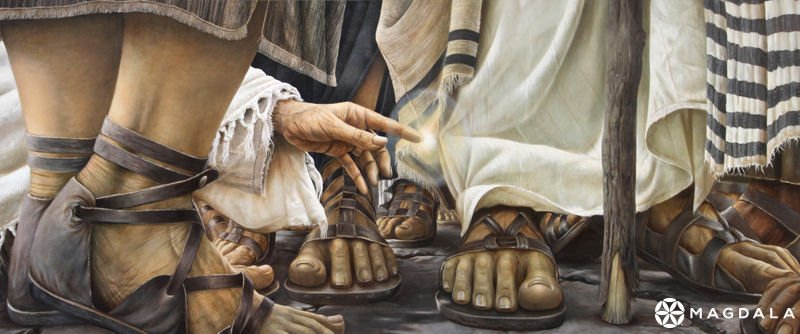
Mark tells us that she said to herself, “If I just touch his clothes, I will be made well” (Mark 5:28).
She doesn’t want to make a scene. She doesn’t want to draw attention to herself. She just wants to reach out quietly.
And so she presses through the crowd and touches the hem of Jesus’ garment.
Healing in His Wings
The detail that the woman touched the “hem” of Jesus’ garment might sound small to us, but it’s actually quite significant.
In the Jewish tradition, men wore garments with tassels on the corners, which were intended to serve as reminders of God’s law and God’s covenant. The “hem” of the garment (the edge where those tassels hung) was a symbol of faithfulness: God’s faithfulness to God’s people, and our call to be faithful to God.
And there’s an interesting connection here to a prophecy in the book of Malachi. In Malachi, the prophet writes: “The sun of righteousness shall rise, with healing in its wings” (Malachi 4:2). The Hebrew word translated “wings” can also mean the corners of a garment. Since this prophecy can be interpreted as referring to the Messiah, Malachi seems to be speaking about a coming day when healing would be found in the very edges of the Messiah’s garment.
Whether the woman was thinking about this prophecy, or about the symbolism of the tassels on the corners of Jesus’ garment, her act of faith, reaching out and touching the hem of Jesus’ garment, is a powerful symbol.
And so she reaches out with trembling hands, trusting and believing that even the smallest contact with Jesus might be enough. Trusting and believing in God’s faithfulness. Trusting and believing that there was healing even in the edges of Jesus’ garment.
And immediately, Mark tells us, her bleeding stops and she feels in her body that she has been healed.
From Outcast to Daughter
But then something surprising happens. Jesus stops walking. He turns around and asks, “Who touched my cloak?” (Mark 5:30).
Now imagine how terrifying that moment must have felt. She hadn’t wanted to draw attention to herself.
But Mark tells us that the woman, knowing what had happened to her, came forward in fear and trembling and told him the whole story. And then Jesus says, “Daughter, your faith has made you well. Go in peace and be healed of your disease” (Mark 5:34).
Interestingly, this is the only time in the Gospels that Jesus refers to a woman as “daughter.”
For twelve years she had lived on the margins of society. She had been ostracized and stigmatized by those around her. Isolated and defined by her illness. But in that moment Jesus declares something different about her identity. She is not unclean. She is not untouchable. She is a daughter. A child of God. Deeply held and loved by the Father.
Jesus doesn’t shame her or scold her for touching him. Instead, he publicly affirms her dignity and removes her shame.
The woman had not been seeking to be the center of attention. But Jesus called her to step from the shadows into the light. Because if she had gone away physically healed but without that public acknowledgment, she would still have carried the stigma of her condition. In calling her forward to tell her story, Jesus restores her, not only to health, but to the joy of community.
The Courage to Reach Out
If we’re honest, many of us know something about shame.
Maybe we do not face the same circumstances that this woman experienced, but we all have hidden struggles we would rather keep to ourselves. Anxiety. Addiction. Financial worries. Family tensions. Failures. Regrets we carry quietly.
Often it feels easier to talk about struggles after they are over than while we are still in the middle of them. We are more comfortable sharing testimonies of healing. But admitting our need while we are still hurting often feels much harder.
And yet the good news in this story is that Jesus meets the woman before she has everything figured out.
She doesn’t start with a testimony. She starts with a trembling reach of faith. Just enough courage to reach out. And Jesus meets her there.
Taking the First Step
This is something I’m reminded of every week in our own church building.
Many of you know that several Alcoholics Anonymous groups meet here throughout the week. If you were to come by on an evening when one of those meetings is happening, you would see people quietly walking in, greeting one another, sipping coffee and sitting on folding chairs in our downstairs fellowship hall.
And one of the most important parts of AA is something called the first step.
The first step simply says:
“We admitted we were powerless over alcohol—that our lives had become unmanageable.”
For many people in recovery, that first step is the hardest one, because it means letting go of the idea that we can handle everything on our own. It means admitting that we need help.
But the remarkable thing is that when people take that step—when they walk into that room and admit their need—they don’t find shame waiting for them. They find understanding. They find community. They find people who say, “You’re not alone.”
In some ways, that moment isn’t so different from the moment in our gospel story. A woman who had spent years suffering quietly finally reaches out. Not with a big speech. Not with perfect faith. Just with trembling hands. And when she does, she discovers something beautiful. She finds that grace flowed even in the hem of Jesus’ garment.
And that same grace is still flowing today, for anyone who feels ashamed. For anyone who feels isolated. For anyone who feels like they have to carry their burdens alone.
The good news of the gospel is that we don’t have to have everything figured out before we come to Christ. Sometimes faith is simply the courage to reach out.
And when we do, we discover that the healing love of God has been reaching toward us all along.
Amen.
Questions for Personal Reflection in Response to today’s message:
- Shame often tells us to hide our struggles. What kinds of struggles are hardest for you to talk about openly?
- Why do you think the woman chose to quietly touch Jesus’ garment instead of asking him directly for help?
- Jesus calls the woman “daughter.” What does this reveal about how Jesus sees people who feel isolated or ashamed?
- When have you experienced the courage to ask for help, and what happened when you did?
- Where might God be inviting you to take a small step of faith and reach out today?
 Hampden United Methodist Church