March 29, 2026 homily on Matthew 21:1-11 by Pastor Galen for Palm Sunday
The crowds that went ahead of him and that followed were shouting, “Hosanna to the Son of David! Blessed is the one who comes in the name of the Lord! Hosanna in the highest heaven!” – Matthew 21:9
I love parades. I love the music, the energy, the excitement, and the crowds of people.
Several years ago when our oldest daughters were little, our family spent Easter weekend in Richmond, VA and attended Easter services at a historic United Methodist Church downtown. After church we decided to take a walk through the city, and as we did so, we started to notice something unusual. Streets were filling up with people—families, couples, groups of friends—many of them also streaming out of churches, dressed in their Easter Sunday best. It turns out that we had stumbled right into the middle of Easter on Parade.
Now, if you’ve never heard of it, it’s exactly what it sounds like. It’s a “parade” where people don’t just attend, but rather everyone becomes part of the parade. There are elaborate hats, creative outfits, people showing off everything from elegant Easter attire to completely over-the-top, whimsical creations, and they just sort of walk up and down the main street through the historical area, waving and talking with one another, admiring each other’s outfits.
At first, we stood off to the side, like spectators, taking it all in. But the longer we stood there, the more it became clear that this wasn’t something you were meant to just watch. You were meant to step into it. To walk along. To join the crowd. To become part of what was happening, even if you hadn’t planned on it.
Jesus’s “Triumphal” Entry
And in many ways, Jesus’ entry into Jerusalem has all the markings of a parade. There are crowds lining the road. There is movement, energy, and anticipation. Jesus and his disciples are processing along the way, with Jesus at the center.
But something interesting happens in this “parade.” The people are not just standing on the sidelines watching. They become participants.
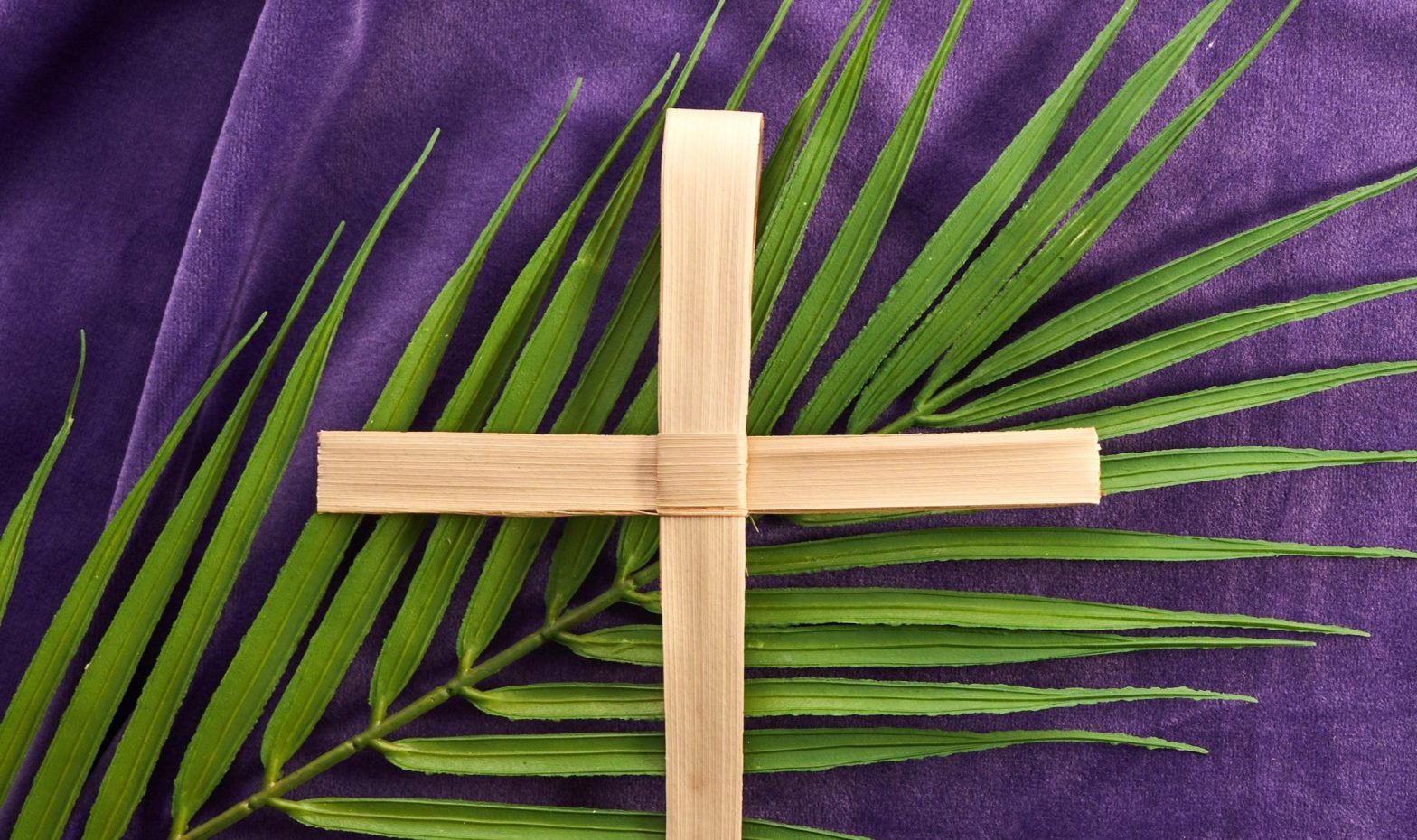
Matthew tells us that people begin taking off their cloaks and laying them on the road. Others cut branches from the trees and spread them out before him. Matthew notes that “the crowds that went ahead of him and that followed were shouting, ‘Hosanna to the Son of David! Blessed is the one who comes in the name of the Lord! Hosanna in the highest heaven!’” (Matthew 21:8–9).
The crowds are no longer just observers. They become part of the procession.
From Observers to Participants
And this is where this passage connects so beautifully with the sermon series we’ve been in these past weeks: Encounters with Jesus.
We’ve been looking at individuals who had personal encounters with Jesus, including Nicodemus, who drew Jesus aside to ask how he could enter the kingdom of heaven; the Samaritan woman, who asked Jesus about living water; the woman who came up to Jesus in the midst of a crowded street and touched just the hem of his garment, believing that Jesus had the power to heal; and Martha, who brought her sister Mary to the feet of Jesus when their brother Lazarus had died and they were grieving.
But here, on this Palm Sunday, something shifts. This is not just one person or one individual encountering Jesus. This is an open invitation for everyone and anyone to encounter him.
It’s an invitation not just to watch, but to follow. To move from standing on the side of the road to walking along the road with Jesus. To move from being bystanders to participants.
In many ways, it reminds us of Bartimaeus, whom we looked at recently. When Jesus called him, he threw off his cloak, which was something that likely represented both his security and his identity, and he followed Jesus.
And here, in this passage, we see the crowd doing something similar. They lay down their cloaks, which for many would have been their most valuable possession. They step into the story. They join the procession.
The Fickle Crowd
And yet, as we know, this same crowd will, just a few days later, cry out for Jesus to be crucified.
Which raises the question: What happened? Why the sudden change?
Part of the answer is that many in the crowd had different expectations about what kind of procession this was going to be. They thought this was the beginning of a political revolution. It was Passover, after all, a time when people remembered how God had delivered them from slavery in Egypt. And under Roman occupation, they longed for that kind of deliverance again.
And now here comes Jesus: this miracle worker, this teacher, this one who had healed the sick and fed the crowds. Surely, they believed, this was the moment. Surely this was the king who would overthrow Rome.
Not the King They Expected
But Jesus enters Jerusalem not on a war horse, but on a donkey. A symbol not of military conquest, but of peace. A sign not of violent uprising, but of a different kind of kingdom altogether.
Jesus was not coming to meet their expectations. He was coming to transform them, individually and as a people.
The Kingdom of Peace
In truth, Jesus’s choice of a donkey can be understood as a symbol of both peace and victory. He came to usher in and proclaim an eternal kingdom: one marked by peace and justice, not just for the people of Israel, but for the whole world.
As the prophet Isaiah declared, “Great will be his authority, and there shall be endless peace for the throne of David and his kingdom. He will establish and uphold it with justice and with righteousness from this time onward and forevermore” (Isaiah 9:7).
Jesus announced God’s victorious rule and reign by defeating the power of sin and death and oppression in whatever form it takes. And he did this not through staging a political coup, but through living a life of self-sacrificial, unconditional love and by teaching his followers to do the same.
Jesus loved the world so much that he was willing even to give his life on the cross for the sins of the world.
Imagine if everyone in the world were to live like Jesus lived and to love like Jesus loved. The world truly would be a different place. It would be revolutionary. And this is what Jesus came to do: to show us how to live, how to love, and to empower us to do so.
The Humble King
As the Apostle Paul tells us in the book of Philippians, “And being found in human form, he humbled himself and became obedient to the point of death—even death on a cross. Therefore God also highly exalted him and gave him the name that is above every name, so that at the name of Jesus every knee should bend, in heaven and on earth and under the earth, and every tongue should confess that Jesus Christ is Lord, to the glory of God the Father” (Philippians 2:8–11).
It strikes me that even today we so often overlay our own hopes and dreams onto Jesus. Rather than accepting Jesus for who he is and why he came: as the humble and victorious king who gave his life for the sins of the world, we continue to gravitate toward whatever depiction of Jesus best fits what we want.
Throughout history, Jesus has been depicted in many different ways: as a conquering military hero or a pushover, a cutthroat businessman, a symbol for the working class, or a patriot. Some see Jesus as an ATM in the sky, who gives us whatever we want whenever we want, or as someone who promised to give us the good life here on this earth.
But if we are to worship and follow Jesus, then we must accept him on his terms, not ours. If we try to force Jesus into our mold or craft him into our image, then we will come away disappointed. And it may even lead us to reject him altogether, like so many in the crowd.
How much better to accept Jesus for who he was and is: the humble king who rode into Jerusalem on a donkey, proclaiming a peaceable and victorious kingdom. The servant who was willing to bend down and wash the feet of his disciples, and who taught his followers to do likewise. The Savior of the world, who loved the world so much that he gave his life for us on the cross, shedding his blood for the sin of humanity. And the victorious king who conquered sin and death and the grave through dying and rising again, and who will one day return to make all things new.
The Invitation
As I think about that moment that our family had when we were in Richmond, standing there at the edge of something we hadn’t planned for, something we didn’t fully understand, and realizing that we were being invited in. We weren’t fully prepared. We hadn’t worn any special outfits, and at first we didn’t even know what was going on. We were simply there.
And in many ways, that’s what Palm Sunday is. Jesus passes by, and the invitation goes out: not just to the prepared, not just to the ones who have it all figured out, but to anyone who happens to be there. The invitation is given to join in. To walk along.
To become part of the story.
The people in Jerusalem didn’t fully understand what was happening. They didn’t yet see the cross or the resurrection. They didn’t grasp the kind of kingdom Jesus was bringing. But they were invited to join anyway.
And so are we. We are invited not just to stand on the sidelines or to observe from a distance. We’re invited to step into the road. To join the procession. To take part in the life that Jesus is calling us into.
Because following Jesus isn’t something we figure out ahead of time. It’s something we step into. Even when we don’t feel ready. Even when we don’t fully understand. Even when we just find ourselves there. So the question for us this morning is simple:
Will we stay on the sidelines, or will we step in? The invitation is still open. To follow him. To walk with him. To become part of what God is doing in the world. Let’s not just stand and watch. Let’s join in, and follow wherever he leads.
Amen!
Questions for Personal Reflection in Response to today’s message:
- Do I tend to approach faith more as an observer or as a participant? Why?
- Where might Jesus be inviting me to step in, even if I don’t feel fully prepared?
- What expectations do I sometimes place on Jesus, and how might they need to be reshaped?
- When have I experienced God inviting me into something unexpected?
- How can I follow Jesus more intentionally, even when I don’t fully understand the path ahead?
 Hampden United Methodist Church