
August 9, 2026 homily on Genesis 37:1-4, 12-28; Psalm 105: 1-6, 16-22, 45b; Romans 8:28 by Pastor Galen
Pastor Galen
“And we know that in all things God works for the good of those who love him, who have been called according to his purpose.” – Romans 8:28
Not in Kansas Anymore
L. Frank Baum’s classic novel, The Wonderful Wizard of Oz, and the beloved film it inspired, tells the story of Dorothy, a young girl living an ordinary life in Kansas when a tornado suddenly sweeps her away and drops her and her dog, Toto, into the magical Land of Oz. Confused, scared, and bewildered, Dorothy says the famous line, “Toto, I have a feeling we’re not in Kansas anymore.”
Journeying through the Land of Oz was certainly not something Dorothy would have wished for. She just wanted to go home. And yet, because of that unwanted journey, Dorothy meets the Scarecrow, the Tin Man, and the Cowardly Lion. She discovers courage and resourcefulness in herself. Her companions discover that many of the things they thought they were missing—a brain, a heart, courage—were already present within them. And by the time Dorothy finally gets home, she sees home differently than she did before she left.
Now, that doesn’t mean the tornado was a good thing. Dorothy certainly wouldn’t have chosen it. But something that seemed terrible when it happened became the beginning of a journey through which something good happened.
Joseph’s Unwanted Journey
Joseph’s journey was certainly not one that he would have chosen either. In Genesis 37, Joseph’s older brothers, who were jealous of him, sold him into slavery and lied to their father, leading him to believe that Joseph was dead (Genesis 37:18–35). What Joseph’s brothers did to him was awful.
And after he arrived in Egypt, things went from bad to worse. At first, he was sold to a master who treated him kindly and entrusted him with responsibility. But his master’s wife falsely accused him, and Joseph ended up in prison (Genesis 39). Certainly not a journey that Joseph would have chosen for himself!
And yet, Joseph was eventually released from prison, and through a miraculous turn of events, he was elevated to the highest position of leadership in Egypt, second only to Pharaoh. He used his God-given ability to interpret Pharaoh’s dreams and provided the input and advice that saved Egypt and the whole surrounding area from starvation during a famine (Genesis 41). Joseph’s family, too, was saved when they came to Egypt to get food, and in the process, Joseph and his brothers were reconciled (Genesis 42–45).
The Wonderful Deeds of the Lord
The Psalmist recounts the story of Joseph as part of a list of wonderful deeds that God has done (Psalm 105:2), saying that it was God who summoned the famine on the land and God who had sent Joseph to Egypt ahead of his family.
The Psalmist writes in Psalm 105:
When [God] summoned famine against the land and cut off every supply of bread, he had sent a man ahead of them, Joseph, who had been sold as a slave.
His feet were hurt with fetters; his neck was put in a collar of iron; until what he had said came to pass, the word of the LORD kept testing him.
The king sent and released him; the ruler of the peoples set him free.
He made him lord of his house and ruler of all his possessions, to instruct his officials at his pleasure and to teach his elders wisdom. (Psalm 105:16–22)
The writers of the Hebrew Bible frequently interpret the events of history through the lens of God’s providence, seeing God at work even through circumstances that involved human choices and human sin. Psalm 105 looks back on the entire story and sees God at work even through the terrible things that happened to Joseph.
Free Will
This is not to say that Joseph’s brothers had no choice in the matter. Certainly, we would say that they were acting out of selfish motivations and jealousy rather than being led by the Lord. Certainly, God could have found another way to send Joseph to Egypt if his brothers had not acted so wickedly and sold him into slavery.
In other words, we do not have to say that God caused Joseph’s brothers to sin in order to believe that God was able to work through what they had done.
But looking back on how the events unfolded, and how God used Joseph’s journey to Egypt to deliver his family from the famine, we can see how the Psalmist would attribute this to a wonderful deed of the Lord. Joseph himself, after he and his brothers were reconciled, told them, “Even though you intended to do harm to me, God intended it for good, in order to preserve a numerous people, as he is doing today” (Genesis 50:20).
What Joseph’s brothers intended for harm, God used for good.
God Works for Good
This is in keeping with Romans 8:28, where the Apostle Paul says that “in all things God works for the good of those who love him, who have been called according to his purpose” (Romans 8:28 NIV).
Notice that Paul does not say that everything that happens is good. He does not say that suffering is good, or tragedy is good, or that the evil things people do to one another are somehow secretly good. In fact, earlier in Romans 8 Paul talks about “the sufferings of this present time” (Romans 8:18), and says that the whole creation is groaning (Romans 8:22). And sometimes we ourselves groan and don’t even know how to pray, but the Spirit intercedes for us (Romans 8:26). And yet, right in the middle of all of that suffering and groaning, Paul reminds us that God is working all things together for good.
Even when natural disasters occur, and we don’t always know why they occur, even when tragedy strikes, and even when people purposefully do evil things against those who love God, Romans 8:28 gives us confidence that God is actively working for good and can bring good through any situation.
Even though Joseph’s brothers intended to do him harm, God brought about something good. And the very next verse helps us understand what Paul means by “good.” Romans 8:29 says that God’s purpose is that we would be “conformed to the image of his Son.” So Paul is not necessarily promising that every bad situation will eventually turn out the way we want it to. Rather, he is saying that even the things we would never have chosen cannot ultimately prevent God from accomplishing God’s purposes in our lives.
Our Actions Still Have Consequences
This certainly does not absolve us as humans of our responsibility to do what is right. Nor does it remove the consequences of our actions. Sin often has its own consequences, and although God can bring good out of any situation, this does not mean that we should go around doing whatever we please.
Sin causes very real damage, both to ourselves and to others. Although God ultimately brought good out of what Joseph’s brothers did to him, think of all the needless pain and suffering they caused. Joseph experienced physical pain, suffering, and hardship, but also the emotional pain of being betrayed by his own brothers and forcibly removed from his family.
Joseph’s brothers also caused terrible emotional pain to their father, Jacob, who loved Joseph and never got over the grief of losing his son. Although he did eventually get to see Joseph alive, about 22 years passed from the time Joseph was sold into slavery until his father saw him again. Joseph was 17 when his brothers sold him into slavery (Genesis 37:2), and he was about 39 when he and his family were reunited. His father missed the opportunity to go to Joseph’s wedding and to witness the births of Joseph’s children. Jacob was robbed of all of those years together with his son.
And years later, it is clear that what Joseph’s brothers had done still weighed on them. When they found themselves in trouble in Egypt, they remembered what they had done and said to one another, “Surely we are being punished because of our brother” (Genesis 42:21). Imagine trying to keep such a horrible secret all of those years. They saw the grief they had caused their father, knowing all along what had really happened.
Yes, God worked for good despite what they had done. And yes, ultimately Joseph chose reconciliation rather than retaliation. But that did not remove the consequences of their actions or undo the years that were filled with pain and suffering and separation and grief.
Wasted Years
Some of us know what it is like to live with guilt. We experience sorrow for what we’ve done, or for pain that we’ve caused to others. Some of us know something about wasted years: running from the Lord or trying to avoid God’s call on our lives.
Of course, we can never go back and undo the things we’ve said or done. And often we can’t make up for the things that we failed to do. But we can acknowledge what we’ve done and ask forgiveness.
Even when it’s not possible to go back to the person we’ve wronged to ask forgiveness, we can pray and acknowledge our sin before the Lord and ask God for forgiveness. And we can trust that God can bring good through any situation. Even when we intended something for harm, God can still bring about something good.
The Threads of Our Lives
The reality is that our lives are made up of a complex set of circumstances and experiences. All of us have wronged others, and all of us have been wronged by others. Even when we mean well, we sometimes make mistakes and mess up. We’ve been hurt by others’ mistakes. Add to that all of the things that we’ve experienced through no fault or goodness of our own. Sometimes it just seems like we were lucky. Other times unfortunate events or even tragedies strike, and there is no one to blame.
All of these things are interwoven in our lives, and they cross and crisscross one another. Sometimes it just feels like a jumbled mess, with some things causing a chain reaction and others just seemingly happening out of nowhere.
The Cross and the Empty Tomb
Of course, as Christians, perhaps the greatest example of this is at the very center of our faith. Jesus was betrayed, falsely accused, tortured, and crucified. None of those things were good. Betrayal was not good. Injustice was not good. Suffering and death were not good. And yet, God did not allow any of those things to have the final word.
God raised Jesus from the dead. The resurrection does not mean that what happened on Good Friday was secretly good. It means that God was able to bring life out of death, hope out of despair, and redemption even through the worst that human sin could do.
And that is the same hope we carry into the painful parts of our own lives. We may not always understand why something happened. We may not always be able to point to some obvious good that came out of it. But we can trust that sin and suffering and even death do not have the final word.
The Tapestry
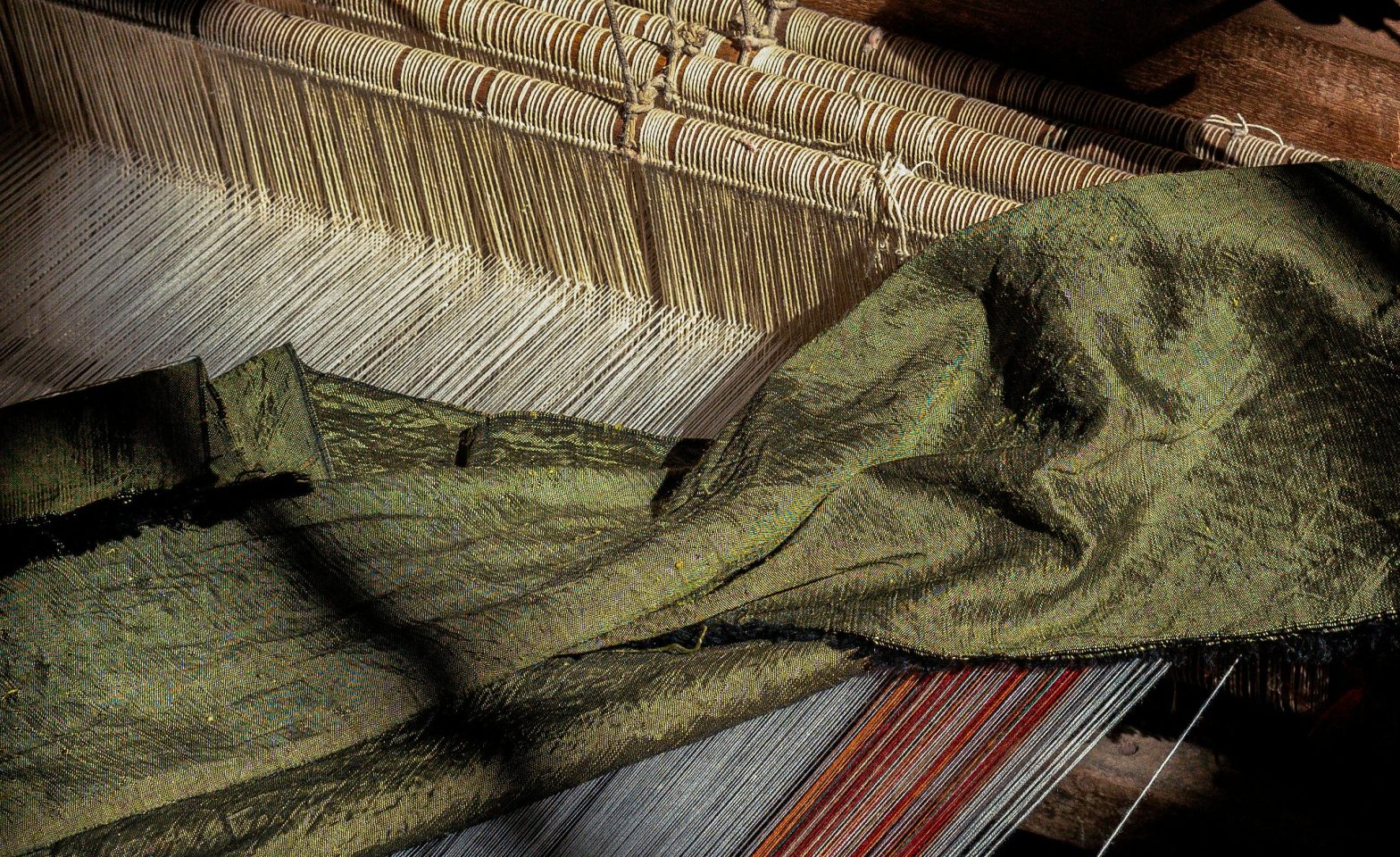
In closing, you’ve probably heard our lives described as a tapestry. If you look at the back of a tapestry, you’ll see all sorts of threads going here and there. Threads overlapping one another, crisscrossing in ways that just don’t make sense. Colors going here and there, and there’s seemingly no rhyme or reason to why they are there or where they’re going. But when you turn the tapestry over and look at the front, you see how all of those seemingly random threads have been woven together to form a beautiful pattern.
Some of the threads in our lives are there because of things other people did to us. Some are there because of things we did ourselves. Some are the result of tragedy or circumstances that none of us would have chosen. But there is no thread in our lives that is beyond God’s ability to weave into something good.
God Is Still Weaving
This is how God works in our lives as well. This is what we see in the story of Joseph, and this is what the Psalmist means when the story of Joseph is described as one of the wonderful deeds of the Lord.
God was able to take all of the pain and sorrow, the horrible things that others did to Joseph, and weave them together into something good.
Of course, none of us would ever wish to relive the painful and traumatic experiences of our lives. We would only choose to relive the good. And yet, God is able to take each and every one of the experiences of our lives—the good and the bad—and weave them into the beautiful tapestry that God is making out of our lives.
We may only be able to see the back of the tapestry. We see the loose threads and the knots and all of the things that don’t seem to make sense.
Joseph certainly could not have seen where everything was leading when he was sitting in the bottom of that pit, or when when he was being carried away from his family or when he was sitting in prison. And sometimes neither can we. But the story of Joseph reminds us that the place where we are right now is not necessarily the end of the story.
And so may we entrust our lives into the hands of our God, who is constantly working for the good of those who love God and are called according to God’s purposes.
May we acknowledge those times when we’ve failed, and may we move forward in hope and in trust that God is working all things together for good.
God is still working. And God is still weaving.
Amen.
Questions for Personal Reflection
- Is there a part of your life right now where you can only see the “back of the tapestry”—the loose threads, knots, and things that don’t make sense?
- How does Joseph’s story challenge the idea that trusting God means believing that everything that happens is good?
- Are there mistakes or “wasted years” in your past that you need to entrust to God rather than continuing to carry in guilt? Where might God be inviting you to seek forgiveness, reconciliation, or healing?
- What would it mean for you to trust that the place where you are right now is not necessarily the end of the story?
- How does the resurrection of Jesus give you hope that suffering, sin, and death do not have the final word?

