
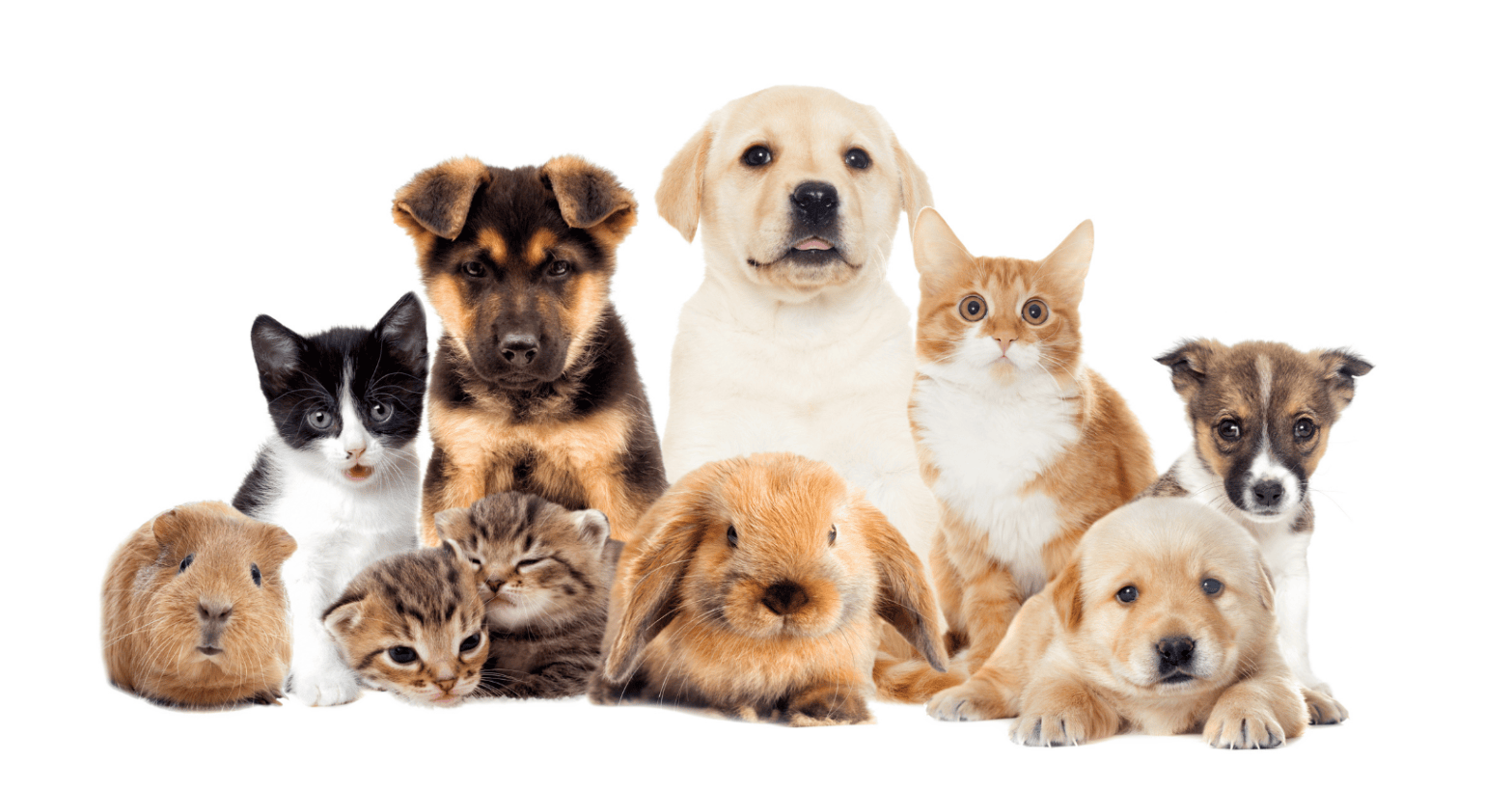
October 11, 2026 homily on Genesis 6:18–22 and Luke 12:22-26 by Pastor Galen for Blessing of the Animals
Making Room for Bernadette and Violet
I have not always been a lover of animals. I didn’t grow up with pets in the house, other than a goldfish that I had for about a month. So when my wife first suggested that we get a cat, I was resistant. But after moving here to Hampden, she finally convinced me to go and visit the animal shelter across the street. And when I saw how much she and my daughters bonded with one particular cat, I finally broke down, and we brought Bernadette home that very same day, and she instantly became a part of our family.
Our other cat, Violet, came to us in a different way. Several years ago, a family who was no longer able to keep her dropped her off at the church on a cold wintry day. We couldn’t leave her outside in the cold, and the animal shelter wouldn’t take her, so we decided to “foster” her until she could find a “forever” home. That was several years ago, and we’ve had her ever since!
Bringing an animal into your home requires making some adjustments. You have to make room for them, provide food for them, and make sure they’re cared for. And in many ways, it involves making room in your heart as well. Maybe you’ve never brought an animal into your house, but perhaps you’ve made space in your life for animals in other ways—whether it’s feeding the ducks at a park, or stopping to let a flock of geese cross the road, or going to the zoo to look at animals.
When we think about the idea of making room in our lives for animals, there’s no better example in the Bible than the story of Noah and his family.
Coming in Out of the Rain
It is somewhat ironic that we’re looking at the story of Noah on this day when we had to move our Blessing of the Animals indoors because of the rain. This is now the second Sunday in a row that rain has interfered with our plans. But perhaps gathering people and animals indoors to get out of the rain is actually a rather appropriate way to remember this particular story! Of course, we’re hoping that the rain won’t last for forty days and forty nights. And I’m grateful that we don’t have to accommodate two of every kind of animal here in the sanctuary!
The story of Noah and the Ark is one of the most iconic stories in the Hebrew Bible, or Old Testament. We love to picture the animals going into the ark two by two, the ark floating on the water and eventually resting on the top of a mountain, and the rainbow in the sky as God’s promise never to destroy the earth with a flood again.
Christians have historically seen Noah’s ark as a symbol of salvation, or of the Church. Just as God saved Noah and his family from destruction, so too we believe that we can place our hope and trust in the Lord for salvation. But this morning I’d like to focus on something that we sometimes take for granted in this story: the fact that so much of the assignment God gave Noah had to do with preserving animals. I was hesitant about making room for even one cat in my life. Imagine being given the assignment of making room for all of the animals that were to come aboard the ark!
A Massive Undertaking
After all, if the only goal had been to save Noah and his family, this could have been a much smaller project! They would still have needed a boat, and enough food and supplies to survive the flood. But they wouldn’t have needed nearly as much space. They wouldn’t have needed all of those rooms, or all of those different kinds of food. And their daily responsibilities on the ark would have been a whole lot simpler.
Thinking about the size and scope of this undertaking, it would have been completely understandable if Noah had said to God, “No way! There’s no way I can do that. It’s too big of an assignment. Maybe I’ll build a little boat for me and my family and a few of our pets, but there’s no way I can gather up two of every kind of animal on the face of the earth, or build a boat big enough to accommodate all of them!” In truth, that’s what most of us would have been inclined to say.
But God’s instructions included the animals. Building the ark and gathering up all of the animals and all of the food they would need was a massive undertaking, and the scale of it was influenced by the fact that God wanted there to be room for all of the animals. Noah’s willingness to obey God made it possible for all of those creatures to survive.
Making Room Day After Day
Of course, as our family discovered with Bernadette and Violet, bringing an animal into your home is only the beginning. Once they become part of your family, caring for them becomes part of your daily life. And for Noah and his family, getting all of those animals inside the ark was only the beginning.
As a child, I always loved this story, but now as an adult, there are so many things that I wonder. How did Noah and his family ensure that they had enough food for all of those animals? Once on board, how did they keep the animals from hurting one another while at the same time making sure that each animal got the exercise that it needed?
And what was it like cleaning up after all of those animals? If you’ve ever cleaned a litter box, or a bird cage, or taken a dog for a walk in the rain, you know that caring for animals isn’t always glamorous! We often picture the moment when the animals entered the ark, two by two. But they needed to be cared for throughout their time on the boat.
Day after day, someone had to make sure they were fed and that their needs were met.
On any given day, the tasks Noah and his family had to do may not have seemed all that exciting. Feeding animals. Shoveling manure. And yet day in and day out they chose to be faithful and obedient, and carried out the assignment that God had given them. Caring for the animals, making room for them, providing food for them, and keeping them alive were all part of what God had called Noah to do.
Many of you know what that looks like in your own lives. It looks like getting up early to let the dog outside, even when you’d rather stay in bed. It looks like cleaning the cage, changing the water, making a trip to the veterinarian, or patiently caring for an animal that is getting older and needs more help than it used to. Sometimes we wonder if the little kindnesses that we show on a daily basis to our animal friends make any difference in this world. The story of Noah reminds us that these humble acts of obedience and care do indeed make a difference.
Consider the Ravens
In our Gospel reading this morning, Jesus invites his disciples to pay attention to another kind of animal: the ravens. (Here in Baltimore, we especially love the Ravens!) Jesus points out that ravens don’t plant crops or gather a harvest, and they don’t have storehouses or barns. And yet God feeds them. Jesus is speaking to people who are worried about their own needs. They’re concerned about what they’re going to eat and how they’re going to live. And Jesus invites them to look at the creatures around them and recognize the care of God.
Now, Jesus does say that we are more valuable than the birds. But notice that his point depends on the fact that the birds already matter to God. God sees them. God provides for them. And if God cares for the ravens, then we too can trust that God knows our needs. I think that’s something we sometimes need to be reminded of. We can become so focused on our responsibilities, on the people and animals who depend on us, that we forget that we also depend on God.
Noah had an enormous assignment. But the lives of all of those creatures ultimately depended on God’s provision as well as Noah’s obedience. God gave the instructions, Noah responded, and through that response the animals received shelter and food.
We too can participate in God’s care for the creatures around us. And even as we care for them, we can trust that we are held in God’s care as well.
A Promise That Includes the Animals
In looking at the story of Noah, I’m struck by the fact that God’s concern for the animals doesn’t end when they leave the ark. In Genesis chapter 9, when God establishes a covenant with Noah and his descendants, God specifically includes the animals as well.
We tend to think of the rainbow as a reminder of God’s promise to us. But in this passage, the animals are included too. They have a place in the future God promises.
And so, as we bless the animals today, we are recognizing creatures that God already knows and cares about. We are giving thanks for their lives, for the companionship they offer, and for the ways they enrich the world we share.
Some of those animals may be here with us this morning—if not physically, perhaps you brought a picture of your pet, or have a picture on your phone. And some of us may be remembering an animal we loved who is no longer with us. Whether or not we have an animal beside us today, we can give thanks for the creatures whose lives have touched our own. And as we ask God to bless them, we can also ask God to help us care for them with patience, compassion, and love.
Making Room Beyond Our Homes
But the story of Noah also invites us to look beyond the animals we know and love personally. After all, God didn’t instruct Noah to make room only for his favorite animals, or for the ones that were easiest to care for. There was room for the wild animals, and the birds, and the creeping things as well. I don’t think any of us have been called to build an ark and gather up two of every kind of animal on the face of the earth. But we are called to preserve and protect the environment, to work for clean air and water, and for the protection of endangered species, knowing that this will be good not only for the world, but for us and our loved ones as well.
Maybe we can’t save the whole world, or protect all of the animals on the planet. But maybe you can adopt a pet. Maybe you can help support the people who care for animals that have been abandoned. Maybe you can help protect a place where birds and other creatures find food and shelter. Maybe you can teach a child to treat an animal gently, and help them recognize that the creatures around us deserve our care.
Although Noah’s task was enormous, he started small. He began building. And then he kept at it, and followed God’s instructions until the task was finished. We too can begin with the creatures and the responsibilities God has placed in front of us. We can pay attention to their needs. We can make room in our lives. And we can trust that God can use those daily acts of faithfulness to preserve and nurture life.
Making Room in Our Hearts
I wonder if there are ways God might be inviting each of us to make room this morning. Perhaps for an animal who needs care. Perhaps for a person who needs companionship or a place to belong. Perhaps for a responsibility that seems inconvenient at first, but through which God can work to preserve and nurture life. We can’t meet every need. We can’t fix all of the brokenness in the world. Only God can do that. But God can use us, in big and in small ways, each and every day, if only we are faithful to obey God’s commands.
And so this morning, may we give thanks for the animals God has entrusted to our care, and for all of the creatures with whom we share this earth. May we trust that God sees our tiny acts of obedience and that God can and will multiply our daily acts of faithfulness for the good of our families and the world around us. May we obey God’s call on our lives, no matter how big or how small the task may seem. And may we look to the Lord for our hope and our salvation, and trust in God’s unfailing love.
Amen!
Questions for Personal Reflection
- How has an animal brought joy to your life or helped you make room in your heart?
- What can caring for animals teach you about faithfulness in everyday responsibilities?
- Jesus invites us to consider how God cares for the ravens. How might noticing God’s care for creation help you trust God with your own needs?
- God’s covenant with Noah includes the animals. How might this shape the way you care for creatures beyond your own home?
- Where might God be inviting you to make room in your life—for an animal, a person, or a responsibility that needs your attention and care?

