October 4, 2026 homily on Psalm Philippians 3:4b-14 by Pastor Galen for World Communion Sunday
“I regard everything as loss because of the surpassing value of knowing Christ Jesus my Lord.” — Philippians 3:8b
World Communion Sunday
Today is World Communion Sunday, the first Sunday of October, during which we remember that we are part of a global, ecumenical, interdenominational, interracial, and intercultural body of Christ.
Our Scripture reading from Philippians seems particularly fitting for World Communion Sunday because, in this letter, the Apostle Paul, a Jewish Christian, is writing to a multicultural group of believers in Philippi.
Cultural Context of Philippians
The church in Philippi was the first church Paul established in Europe. Although some of the believers may have had Jewish backgrounds, many were Gentiles living in a world that was heavily influenced by Greco-Roman culture. Growing up in that context, they were used to living in the midst of a diverse society where there were many competing values. But now that they were followers of Christ, they were heading into uncharted waters, living in a world where most people did not recognize Jesus as Lord or Messiah, and where even the majority of their Jewish peers did not recognize Jesus as the Messiah.
Meanwhile, there were many non-Jewish people turning to Christ. Gentiles were accepting Jesus not just as the Jewish Messiah, but acknowledging Jesus as the Lord and Savior of the whole earth. The King of kings and the Lord of lords.
And so many of Paul’s letters address the topic of what it means to follow Jesus, not just as an individual follower of Christ, but as a member of a specific family and ethnic community.
The people of Paul’s day were wrestling through what it looks like to follow Jesus as a Hebraic Israelite, or as a Greek-speaking Israelite, or as a Gentile, or a member of any number of ethnicities and cultural backgrounds.
Now, today we hear the words “culture” and “ethnicity” and we immediately think about the topic of “race,” which, of course, is a huge hot-button topic in our world today.
But back then, the people would not have thought so much about “race” as they would “family of origin,” “tribe,” or “lineage.” For the Israelites, it wasn’t about the color of your skin so much as: were you a Jew or a Gentile? And if you were a Jew, were you born into Judaism, or were you a convert? And if you were born into Judaism, could you trace your family lineage back to the original 12 tribes?
For the non-Jews, there were deep separations and divides among those who were citizens of Rome vs. those who were non-citizens. Slaves vs. free, landowners vs. laborers, and Romans vs. what were called “barbarians.”
And so, while there may not have been racial divisions like we have today, there were definitely plenty of ways in which the people divided themselves up and thought of themselves as unique and distinct.
But we see here in Philippians 3 that Paul wants them to be concerned not with where they’ve come from, but where they’re going. Not with who they’re related to, or their family of origin, or even their religious background, but rather Paul wants them to be concerned with and utterly focused on knowing Christ.
As an example, Paul shares his own story, his own cultural background, and the religious qualifications in which he used to take pride.
A Hebrew Born of Hebrews
Paul says that he was circumcised when he was eight days old, a member of the people of Israel, of the tribe of Benjamin, a Hebrew born of Hebrews.
In other words, Paul was pretty much born in the “synagogue.” To put it in our context, he was placed on the cradle roll when he was born, baptized at an early age, and taken to church and Sunday school all of his life. He never missed a Sunday, and any time the doors of the church were open, he and his family were there.
Zealous
But Paul was not just passionate about his faith, about learning all there was to know about his religion. He was also passionate and zealous about defending his faith and culture and his people’s way of life.
When he grew up, Paul became a Pharisee, a member of an ultra-religious Jewish sect that sought to preserve and protect the Jewish faith from being watered down or compromised. The Pharisees sought to apply the teachings of the law carefully to everyday life, including practices of purity and religious observance. They also developed and preserved traditions about how the law should be interpreted and lived out in everyday life.
While no doubt many of the Pharisees sought to do this peacefully, some were quite zealous about defending their faith, and Paul himself actually became a rather violent persecutor of Jews who had become followers of Jesus. In some ways, we might think of him as a “violent extremist.” In Paul’s mind, the violent actions of persecution that he committed were actually acts that proved his devotion to God.
Encountering Jesus
That is, until he met Christ. For Paul, encountering Jesus Christ changed everything. When Jesus appeared to Paul on the road to Damascus and revealed himself as the risen Christ, it transformed Paul’s whole worldview and mission. Paul eventually came to understand that the good news of Christ was for Gentiles as well as Jews.
After Paul met Christ, those markers of cultural and religious identity were no longer proof of Paul’s closeness or proximity to God. Indeed, Paul realized that no matter how conscientious he had been in keeping the law, he had missed the critical component of love. As fastidious as he had been in trying to dot every “i” and cross every “t,” he had failed to love God and his neighbor. He was just as much a sinner, in need of God’s grace and forgiveness, as anyone else. He needed Jesus to save him, to redeem him, and to forgive him just as much as someone who had never gone to church their whole life.
And Paul eventually came to realize that his religious upbringing was not given to him so that he could lord his knowledge of the Scriptures over others, but so that he could share the Good News with others. His religious fervor and zealous nature were not given to him so that he could defend his people’s culture and way of life or persecute those who he thought were going astray, but rather so that he could gently and lovingly point others toward Christ.
Pressing Toward the Goal
For Paul, after his conversion on that road to Damascus, the most important aim and goal in his life became knowing Christ: to know “the power of his resurrection and the sharing of his sufferings” (Phil. 3:10a). Paul even hoped that in his death he would become like Christ (Phil. 3:10b). And he longed to help others know and experience Jesus as well.
Paul recognized that he had not yet reached the goal of becoming like Christ, and so he pressed on and encouraged the church in Philippi to do the same. Using the imagery of an athlete straining toward the finish line, Paul said that he is pressing “on toward the goal for the prize of the heavenly call of God in Christ Jesus” (Phil. 3:14).
And what about all those qualifications that Paul mentioned? That whole list of things that he used to take pride in? The marks of his own national and religious pride? Paul says that he regards them “as rubbish, in order that I may gain Christ.”
For Paul, knowing Christ is the most important thing—more important than your family of origin, whether or not you grew up attending church, whether or not you’ve done “great things” for God, whether or not you’ve done everything right or broken every rule in the book. Knowing Christ and being “found in him” is better than any earthly trait or characteristic.
A New Identity in Christ
What that means for us, of course, is that no matter who you are or where you’ve come from, God’s arms of love are open to you. None of us can earn God’s love by doing enough good works, or by going to church, or by tithing, or trying to do the right thing. Those things are an appropriate response to God’s love, and they help us grow in our love for God and others, but they do not make us deserving of God’s love. God’s love is a gift, offered freely to all.
All we need to do is accept that free gift of love and open ourselves up to God’s transforming mercy and grace. Once we do that, once we open ourselves to Christ’s love, like Paul who encountered Jesus on the road to Damascus, we will never be the same. If we allow him into our lives, our lives will be turned upside-down — or rather, right-side up.
The good news is that none of us are too far gone. No one is beyond the reach of God’s grace. No matter what we’ve done or failed to do, God’s love meets us right where we are. There’s nothing we can do to earn God’s love, and there’s nothing we can do that disqualifies us from God’s love.
What this also means is that in Christ, we have a new identity. A new family. This family is made up of believers all around the world and all around our city—many of whom look different from us. Many of whom speak a different language from us, practice different customs from us, and worship in a different way from us.
Our old loyalties are gone. Our previous allegiances have been annulled. Now we pledge our faith and our allegiance first and foremost to Jesus—the one who has saved us and redeemed us, the one who has brought us into right relationship with God and with one another, the One around whom our whole lives revolve.
Conclusion
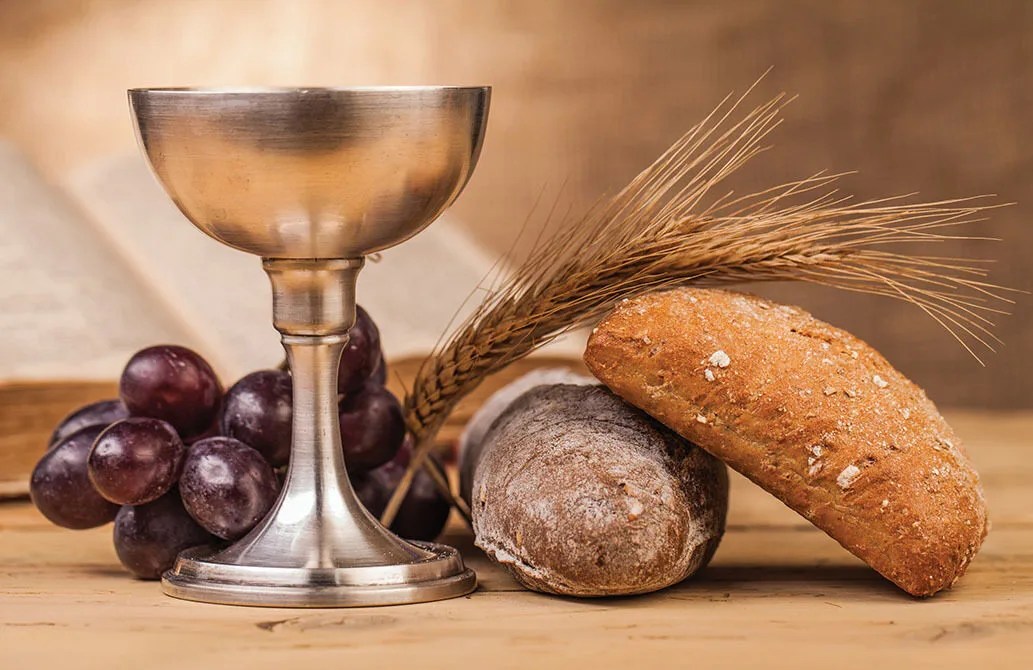
And on this World Communion Sunday, that is what we remember as we come to the table. Around the world today, Christians from countless cultures, traditions, and backgrounds are gathering to receive the same gift of grace. We come with different stories and different experiences, but we belong to the same family because we belong to Christ. May this table remind us that God’s grace is wide enough for all of us, and may we continue pressing on toward the goal of knowing Christ more fully.
Amen!
Questions for Personal Reflection
- What parts of your background or identity have most shaped the way you understand faith?
- What does it mean to you personally to “know Christ” rather than simply know about Christ?
- How does the idea that God’s love is freely given affect the way you think about yourself?
- Is there anything in your past that makes it difficult for you to believe that God’s grace is truly available to you?
- On World Communion Sunday, what does it mean to you to belong to a family of faith that includes Christians from different cultures, traditions, and parts of the world?

